

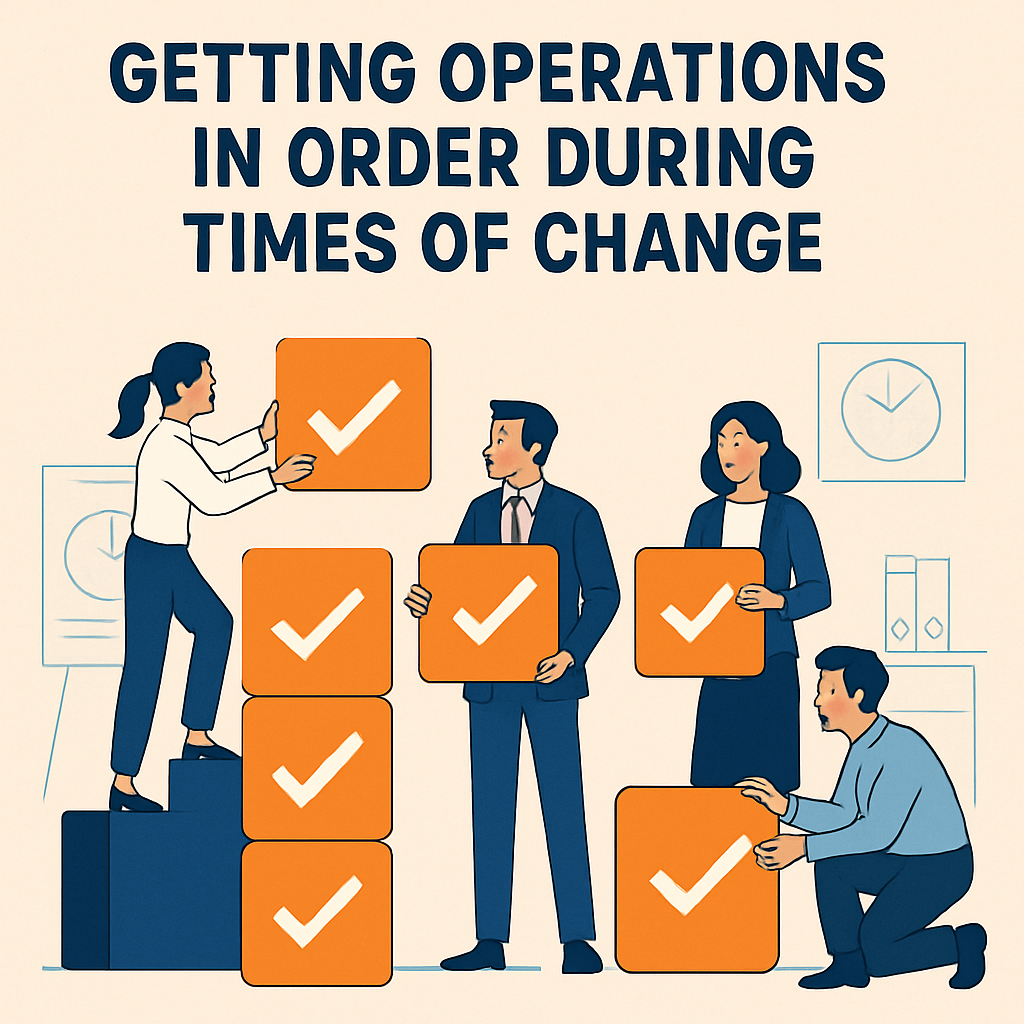
The Key to Success; AI and the role of Process Management
The arrival of Artificial Intelligence (AI) will create even more dynamism for organisations in the coming year, driving a need to stay in control and involve employees in change and transformation initiatives. This is an important role for process management.
In recent years, AI has seen a dramatic rise across many organisations. This raises questions for many leaders, asking; Can we utilise this? What is the impact if we apply AI here?
As more use cases and learnings around these technologies emerge, expectations around it capabilities are similarly evolving. Along with optimism about the opportunities, organisations are also critical in understanding that not all AI initiatives produce immediate and desired results.
With this new technology, crucial questions arise:
- How do you monitor the quality of service?
- How do you maintain an overview and control over how the work is carried out and where? And who are the stakeholders?
- How do we mitigate risks and errors in AI solutions?
The role of process management is to help organisations address these questions.
Why process management?
First, an important definition; process management is not "just" the trick of Lean specialists to make services and products cheaper, faster, and better. It is a field that focuses on mapping out the main activities of an organisation, such that they can be discussed with employees and stakeholders to define responsibilities and gain control over who does what.
Process management provides overviews and insight into the business processes. This plays an important role for organisations in setting a foundation for success and to make smart investments in AI.
Key components of process management for AI
1. Know the process before you deploy AI
Early adoption of new IT systems can bring exciting changes, but it's crucial to first understand the process. Above all, executive teams must have visibility into exceptions in the process and service delivery. What happens if something doesn't go according to the 'happy flow'? How are exceptions dealt with in the process? If AI (or automation in general) is applied in a (sub)process, it is essential to fully understand and map out each scenario. This requires input from employees who carry out these processes.
Developers can then build solutions within this framework.
2. Improve before implementing AI
When translating activities into a process overview, it is useful to ask employees where improvements can be made. This stimulates discussions about efficiency and closing gaps. This step is important before AI implementation, as automation is most effective in an optimised process and can be costly to change once integrated. As Bill Gates once stated, "when you apply automation to efficient operations, you multiply the efficiencies. If you apply automation to an inefficient organisation, you increase the inefficiencies."
3. Involve the employees
Process management is particularly important in digital organisations, such as government and public sector. It helps to make primary processes visual and easy for employees to discuss. This also makes it clear where, and how, AI can be used. In factories for example, this is usually easier by default because processes are physically visible. For more digital organisations, if AI solutions are only managed by an IT department, how do employees learn to use them while continuing to support current service delivery? How do they determine which tasks can or cannot be fully automated? By incorporating AI into process discussions and development, organisations can determine where and how it can be deployed. This also helps to clearly define roles and build accountability for long-term success.
4. Special quality controls
By actively involving employees, subject teams are given the opportunity to take ownership of a crucial task: performing quality checks on AI-driven workflows. Recently, market experts at Forrester presented research that AI solutions are only qualitatively reliable for 3 to 6 months. Technology is changing so quickly that controls are essential. Many AI models get updates that require new prompts to continue working properly. Teams should not only monitor qualitative progress but also embed quality checks as part of the solution. For example, an AI solution automatically performs a first step of self-service, after which employees check accuracy. Process management makes it possible to carefully design AI support services. The process maps not only include the AI solution, but also clearly indicate where quality checks take place and who is responsible.
5. Overviews and insight
With a process structure / architecture, you can relatively easily keep track of which technology is used, where applied, for what purpose, and which roles are involved. From there, organisations can easily create reports on AI implementations across all processes. When the start date is set, we can monitor progress and guarantee quality. Process management then provides a clear overview and insight. By managing these overviews digitally instead of in spreadsheets, teams can make changes quickly and stay current. In addition, the overview can be easily integrated into the quality manual in a visual and clear way with graphical representation.
6. In perspective with other changes
Primary services of an organisation are not only changing due to AI and automation, but also due to other factors such as new employees, regulations or implementation of new technology. In the process overview, all change processes are brought together and related to the primary service (processes) of the organisation. This central framework helps teams stay up-to-date and prevents siloed projects from being developed with unintended consequences in other parts of the organisation.
Conclusion
Process management plays an important role in providing visibility and creating insight into the primary services of an organisation. Actively involving employees in understanding and documenting these processes is the foundation for successful AI implementations and other change initiatives. In doing so, organisations maintain control over their operations in a rapidly changing environment.
For more on the role of process management in Automation, download our Whitepaper here.